
- Event
- Just City
National Conference on Housing 2026: Do We Need a Standalone Housing Policy?
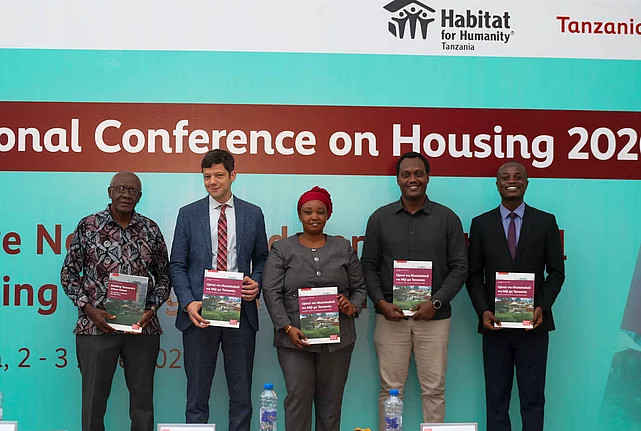
In Tanzania, housing underpins dignity, public health, education, and economic productivity. It is a vehicle for citizens to thrive, not just a matter of basic shelter. As the guest of honor, Mr. John Osena, on behalf of Hon. Lucy Kabyemera (Deputy Permanent Secretary, Ministry of Lands, Housing and Human Settlements Development), noted in his opening address: "Adequate housing is a pillar of dignity, security, and social and economic development. It is the foundation of good health, quality education, and productive efficiency."
While the ruling CCM Party Manifesto (2025–2030) and the National Development Vision 2050 (NDV 2050) both position housing as a driver of inclusive growth and social justice, housing strategies remain fragmented across broader human development policies. This structural dispersion weakens the country's capacity to address core issues like affordability, standard quality, and long-term sustainability, leaving low-income urban residents disproportionately vulnerable to housing insecurity.
This deficit raises a critical question: is it time for Tanzania to establish an independent, standalone housing policy? A dedicated framework would elevate housing to a distinct national priority, creating coherent mechanisms for financing, regulation, and delivery that serve all citizens, particularly vulnerable populations. Mr. Osena welcomed this dialogue, stating: "The debate regarding the existence of an independent housing policy is a healthy discussion, provided it receives the opinions and perspectives of various stakeholders."
To address this, the Just City Platform (JCP), a voluntary working group of urban practitioners, trade unionists, civil society members, and academics, has developed a position paper and policy brief advocating for a dedicated national housing policy. Rooted in the mandates of national frameworks, the JCP initiative aims to centralize housing on the national agenda and expand access to secure, affordable, and inclusive living spaces across urban, rural, and socio-economic divides.
The National Conference on Housing 2026, convened at the African Dreams Conference Center in Dodoma on 2–3 June, served to launch this position paper and policy brief. The event brought together government ministries, local authorities, civil society, academia, the private sector, political entities, and grassroots organizers. Beyond the launch, the conference presented key JCP outputs, synthesized insights from the Africa Urban Forum (AUF2) and the World Urban Forum (WUF), and built a strategic roadmap for a standalone housing policy.
Conference Structure and Proceedings
The two-day forum was collaboratively organized by Friedrich-Ebert-Stiftung (FES)—an organization that has supported Tanzania's democratic and social justice efforts for over five decades—alongside Habitat for Humanity Tanzania and the Just City Platform.
Day 1 featured the official launch of the JCP position paper, media briefings, and a high-level expert consultation.
In his opening remarks, Mr. Osena outlined the ministry's core mission: "Our job is to ensure that the Ministry fully enables effective land management and human settlements development services to improve the social and economic well-being of all Tanzanians.”
The day panned to critical discussions on recognition of housing as a basic right within Tanzania’s development vision, examining the historical and political factors that shaped this commitment, how it had been translated into policies and programs, and the institutional reforms, coordination mechanisms, and accountability systems needed to make the right to housing a reality. Building on this discussion, the second session focused on generating political will for a standalone housing policy by identifying gaps in the current housing framework, exploring governance and coordination challenges, and assessing how a dedicated policy could strengthen housing delivery while aligning with the CCM Party Manifesto (2025–2030) and Tanzania’s National Development Vision 2050. Together, the sessions provided a platform for policymakers, researchers, and practitioners to discuss practical pathways toward a more inclusive, effective, and rights-based housing sector in Tanzania.
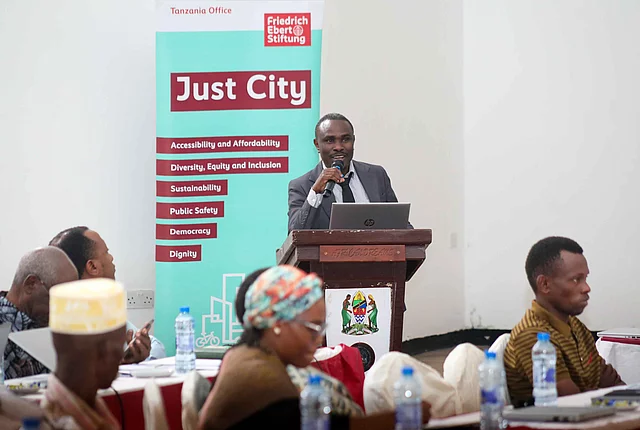
Day 2 expanded the dialogue to a broader stakeholder group, integrating grassroots perspectives to ensure diverse communities directly shape Tanzania's housing trajectory.
The day started with a reflection lessons from the Second Africa Urban Forum (AUF2) and the World Urban Forum (WUF), examining how key discussions and recommendations from these platforms could be adapted to Tanzania’s housing priorities, particularly in relation to policy development, financing gaps, and climate resilience. The following session focused on urban infrastructure financing and affordable housing, exploring innovative financing models, government subsidies, mortgage schemes, microfinance, public-private partnerships, securitization, and co-ownership approaches that could expand access to affordable housing while promoting sustainability and inclusivity. Discussions also considered how housing could contribute to wealth creation without compromising its social function as shelter and how a standalone housing policy could improve access to housing finance. The forum concluded with practical experiences from the ground, where representatives from Tanzania Women Architects for Humanity (TAWAH) and Habitat for Humanity Tanzania shared insights on community-driven housing interventions and the impact of their work in improving housing conditions and expanding access to adequate shelter.
The conference was officially closed by the Lord Mayor of the City of Dodoma. In his closing address, the Mayor commended the depth of the two-day deliberations, reminding attendees that the end of the event does not signal the end of the work: "We have reached the end of the Conference, but it is not the end of the discussions regarding the affordable housing agenda for Tanzanians... Therefore, the debate about an independent national housing policy should not end here."
Crucially, the Lord Mayor issued a call to action for the organizers to translate the forum's energy into policy outcomes, stating: "After the good work of organizing this discussion platform, it is now our responsibility to ensure that the recommendations presented are submitted to the relevant authorities so that they can be translated into national development policies and plans." By doing so, he noted, stakeholders would do justice to the immense human and financial resources invested in the conference.
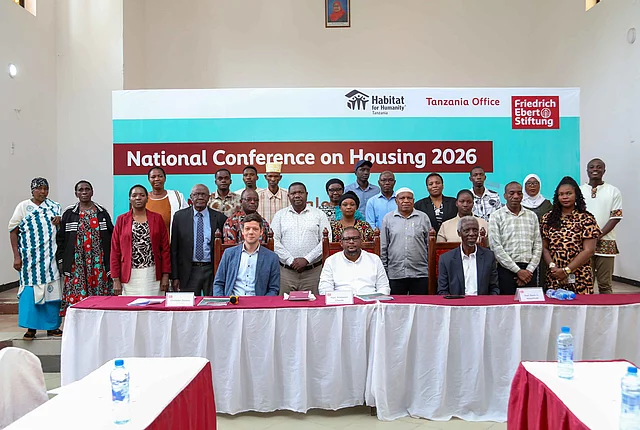
Cultivating Political Will for a Dedicated Framework
A core focus of the conference remains mobilizing political commitment for an independent housing policy. Sessions analyzed institutional gaps, demonstrating how subsuming housing under broader policy umbrellas dilutes its impact. Discussions centered on aligning a standalone housing policy with existing national development strategies, supported by governance reforms to improve inter-agency coordination. Crucially, the forum explored methods to engage parliament and political parties to champion housing as a sustained, non-partisan national priority.
Panelists drove this dialogue by evaluating current policy gaps, identifying necessary governance reforms, and proposing strategies to maintain political momentum. They also addressed how a standalone policy can operationalize the housing commitments within the CCM Party Manifesto and NDV 2050 to maximize implementation outcomes.
Ultimately, the National Conference on Housing 2026 provided a decisive platform for stakeholders to shift housing from a secondary policy consideration to a standalone national mandate, ensuring safe and equitable housing for all Tanzanians.
Watch the Event Highlights (in Kiswahili)

Building Tanzania's urban future
Nyiti, Albert ; Njavike, Emmanuel | Dar es Salaam : Friedrich-Ebert-Stiftung Tanzania, March 2026
the need for a national housing policy